

In person.
Take payments at your counter, service location or on the go with suitable terminals and POS options.
Take payments at your counter, service location or on the go with suitable terminals and POS options.
Give customers a way to pay through your website or a supported hosted payment experience.
Enter authorized remote payments through a browser-based virtual terminal.
Set up supported repeat billing for subscriptions, memberships or ongoing services.
The customer presents a card or provides payment information through your chosen payment experience.
The payment system asks the card issuer whether to approve the transaction. An approval is not the same as money reaching your bank account.
Approved transactions move through the applicable clearing and settlement process.
Funds are paid out according to your account terms, subject to applicable fees, adjustments or holds.
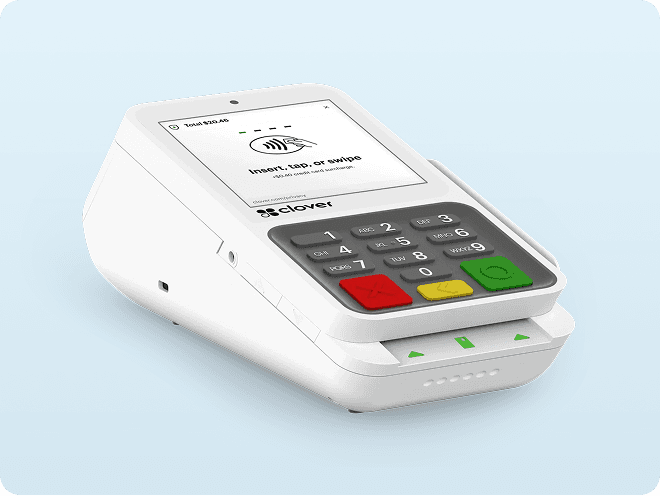
A countertop terminal, mobile reader and POS system serve different workflows. Consider where staff take payments, whether the device needs to move, and how sales information fits into your daily operations.
Chip, contactless and swipe acceptance depend on the device and processing setup. Review compatible hardware before choosing equipment.
A payment gateway connects your checkout or payment interface with processing services. A payment link can direct customers to a hosted payment page, while a virtual terminal lets your team enter authorized payments remotely.
Choose the tools you need for your sales process instead of assuming every business needs the same checkout.
Interchange-plus pricing separates interchange from the provider’s processing markup. Network charges and other applicable fees can also contribute to the total cost.
To compare offers, look at your sales volume, transaction sizes, card mix, payment channels and the complete agreement. A quoted rate alone does not describe every cost.
Understand how your selected hardware, checkout or virtual terminal handles payment data.
Ask which fraud tools and account-access controls apply to your solution.
PCI requirements and operational practices depend on how your business accepts and handles payment information.
Payline can help you identify the questions to review with the applicable provider. No payment tool eliminates every security or dispute risk.
The payment system requests authorization, then eligible transactions are cleared and settled. Your provider funds your business according to the account agreement.
The total depends on your transaction activity, pricing model, payment tools and applicable fees. Review a quote and agreement against the way your business actually accepts payments.
It is a pricing structure that separates interchange from the provider’s markup. Other charges may still apply, so compare the complete fee schedule.
Funding timing depends on your approved account terms, transaction submission, banking schedule and any applicable review or hold. Confirm the schedule for your specific account.
Yes, businesses can use both channels with a compatible, approved setup. Hardware, gateways and reporting should be evaluated together when planning the solution.
Online and many remote payment experiences use gateway technology. It may be included in the service you choose rather than purchased separately.
Some can, subject to industry eligibility and underwriting. Payline helps explore appropriate processing options without promising approval. Explore high-risk accounts.
Tell us where and how you sell. We’ll help you explore your processing options.


