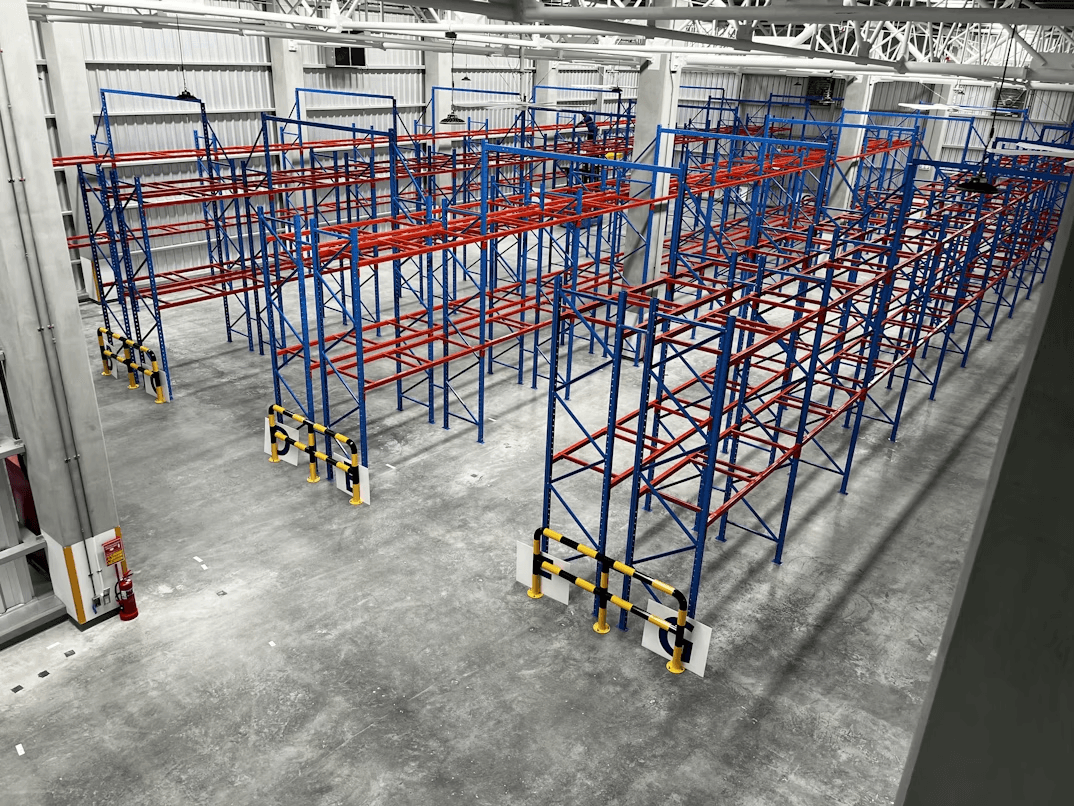
From Cluttered To Organized: Pallet Racking That Transforms Operations
A warehouse can feel like traffic at rush hour when space is tight, and inventory is everywhere. The quickest way to restore order is to let your storage do more of the work. With the right pallet racking strategy, you turn clutter into clear lanes, faster picks, and safer shifts.

From Chaos To Clear Aisles
Think of racking as the skeleton of your operation. When it is sized, spaced, and anchored correctly, everything else becomes easier to control.
Clear slotting rules and visible labels help workers know where every pallet lives, so travel time drops, and errors shrink. Over a week, those saved minutes stack up into real capacity.
Design Choices That Unlock Space
Start with the building envelope, then design racks around actual SKUs and movement patterns. Heavy or high-velocity items belong in the golden zone from knee to shoulder height, and slower movers can live higher or deeper.
Your local partner can help with this. Think about pallet racking solutions in Ohio, West Virginia, or whatever is local to you to audit aisles, slotting, and load data. A quick redesign of beam elevations or bay widths often reveals hidden cubic feet you already pay for but cannot reach.
Safety And Stability Start In The Design
Racks are structures, not furniture. That means engineering for load, impact, and seismic forces before a single upright is bolted down.
Industry guidance notes that today’s rack calculations follow updated methods referenced by the International Building Code and ANSI MH16.1-2023, which sets expectations for stability and seismic checks.
Building to a current standard protects workers, product, and the facility, avoiding costly rework later, and it signals to insurers and inspectors that your system was planned with risk in mind.
Aisles, Access, And Throughput
Aisle width is not a guess. It should match your equipment turning radius and the pallet’s swing path, leaving just enough clearance for safe maneuvers.
Narrow the aisle too much, and you trade capacity for bent uprights and slowed travel. Keep it too wide, and you waste precious square footage. The sweet spot is the one that your lift trucks can repeat all day without nudging guards or racks.
The Numbers Behind Modern Racking
You do not need a crystal ball to justify better storage. Market analysis has tracked steady growth in warehouse racking thanks to e-commerce, higher SKU counts, and pressure to do more within existing footprints.
One recent outlook projected the warehouse racking market to expand through 2030 at a healthy clip, a signal that companies are investing in space efficiency instead of building new walls. That trend lines up with what many operations teams feel on the floor every day.
Safer Storage, Fewer Incidents
Order is not just about neat lines of pallets. Safer layouts reduce the chance of struck-by incidents and product falls near dock approaches and high-traffic cross aisles.
Federal safety reporting highlights how much visibility employers now have into injury patterns, thanks to hundreds of thousands of annual submissions on workplace incidents.
When you pair that level of insight with a disciplined rack inspection schedule, damaged components are pulled from service quickly, and small hazards do not become big claims.
Flow That Matches How Work Gets Done
Racking should mirror your actual work, not an idealized version of it. If you pick cases all day, give pick faces prime real estate and feed them from reserve with pallet flow or mezzanines where it makes sense.
If your demand is lumpy, design for fast re-slotting with adjustable beams and standardized hardware, so resets take hours, not days. The best systems make tomorrow’s change painless.
Choosing The Right Format For Each SKU Family
Selective racks excel when you need access to many SKUs with moderate depth. Drive-in and push-back shine when depth outweighs selectivity.
Pallet flow adds first-in-first-out discipline for date-sensitive goods. Many facilities blend formats by zone – the key is to align cube, turns, and handling equipment with the rack type so operators never fight the layout.
Data-Driven Layout Tweaks That Pay Off
Small changes can have outsized effects. Moving across an aisle to relieve congestion near packing, raising top-beam elevations to capture another pallet position, or swapping end-of-aisle posts for heavier protection are low-cost wins.
Measure pick rates and travel paths before and after each tweak, then lock in the gains with updated maps and training. Continuous improvement is easier when the structure welcomes change.

What A Strong Implementation Looks Like
Kick off with a short discovery sprint that maps SKU dimensions, weights, turns, and seasonality. Confirm floor flatness and slab capacity, then size uprights, beams, and anchors to load plus impact.
Plan installation in waves to keep operations running, and wrap with inspections, load signage, and a maintenance cadence. When the build is grounded in real data, your racks stay efficient and safe long after go-live.
A clean, resilient warehouse is not a one-time project – it is a system that supports how people work. When the structure is right, teams move confidently, errors fall, and space feels bigger without adding a single square foot.
The payoff shows up in safer shifts, faster picks, and a layout that adapts as your business changes.