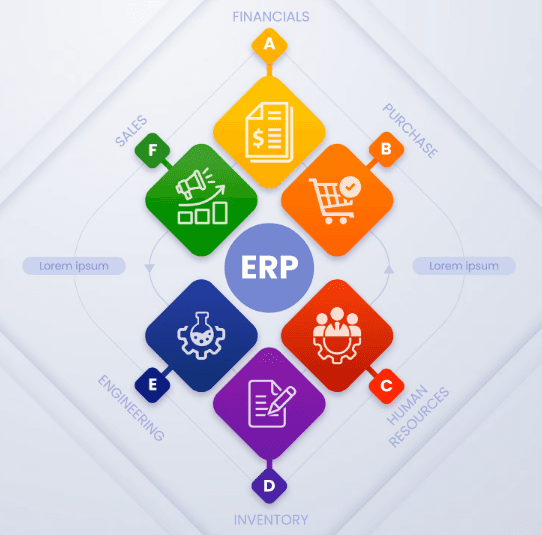
7 Benefits of Cloud ERP Solutions for Discrete Manufacturers

Discrete manufacturing environments are defined by a high degree of operational complexity. Production workflows often involve detailed bills of materials, multi-level assemblies, and frequent coordination between engineering, procurement, production, and finance teams.
At the same time, manufacturers must manage ongoing engineering changes, fluctuating customer requirements, and increasing pressure to deliver accurate lead times and consistent product quality.
As markets become more competitive and customer expectations continue to rise, many discrete manufacturers begin to question whether their existing systems are still capable of supporting these operational demands effectively.
During this reassessment phase, cloud ERP solutions are increasingly evaluated not as a short-term replacement for aging software, but as part of a broader, long-term strategy to improve visibility, control, and scalability across the organization.
Rather than focusing solely on technology features, manufacturers typically assess how cloud-based ERP can support day-to-day operations, enable better coordination between departments, and provide more reliable data for planning and decision-making.
This article outlines seven practical benefits discrete manufacturers commonly consider when comparing cloud ERP against legacy or on-premise systems, with an emphasis on real operational impact rather than vendor-specific positioning.
1. Improved Visibility Across Manufacturing Operations
Operational visibility is often one of the first gaps identified during system evaluations. Discrete manufacturers frequently rely on a combination of spreadsheets, standalone production tools, and accounting systems, which can make it difficult to gain a unified view of operations.
Cloud ERP platforms centralize production, inventory, purchasing, and financial data into a single environment.
This allows teams to monitor:
- Work orders and production progress in real time.
- Material availability and shortages.
- Order status and delivery commitments.
- Financial performance is tied directly to operations.
When reviewed as part of a broader manufacturing software system, this consolidated visibility helps managers move from reactive problem-solving to more proactive decision-making, especially in environments with high product variability.
2. Better Support for Multi-Location Manufacturing Operations
As discrete manufacturers expand, they often add new production facilities, warehouses, or sales offices. Managing consistency across locations becomes increasingly difficult when systems are fragmented or heavily customized at the site level.
Cloud ERP platforms are commonly considered because they offer ERP Cloud Hosting, which enables:
- Centralized master data management.
- Location-specific production rules and workflows.
- Consolidated reporting across multiple sites.
This approach allows organizations to maintain standardized processes while still accommodating operational differences between facilities. For manufacturers operating across regions or planning future expansion, this flexibility is a key consideration during ERP evaluations.
3. Reduced Infrastructure and IT Maintenance Burden
Legacy ERP systems often require significant internal resources to maintain servers, apply updates, manage backups, and address performance issues. These responsibilities can divert IT teams away from higher-value initiatives.
With cloud-based ERP, infrastructure management is typically handled by the provider.
From a decision-making standpoint, manufacturers often assess benefits such as:
- Fewer internal hardware dependencies.
- Automatic system updates and enhancements.
- Reduced risk associated with outdated software versions.
While cloud ERP does not eliminate IT involvement, it can simplify system administration and improve overall reliability when compared to traditional deployment models.
4. Faster Response to Engineering and Product Changes
Engineering change management is a constant challenge for discrete manufacturers. Design updates that are not communicated effectively across departments can result in incorrect builds, material shortages, or production delays.
Cloud ERP systems are often evaluated for how well they:
- Synchronize engineering revisions with production data.
- Ensure purchasing and inventory reflect current specifications.
- Maintain traceability between revisions, orders, and costs.
When compared alongside existing manufacturing ERP software, the ability to manage engineering changes more efficiently is frequently seen as a direct contributor to reduced rework and improved production accuracy.
5. Scalability to Support Business Growth
Growth introduces new complexities, higher-order volumes, more users, expanded product lines, and additional reporting requirements. Systems that worked well at smaller scales may struggle to keep up.
Cloud ERP platforms are commonly considered because they offer:
- Easier expansion of user access.
- Support for increasing transaction volumes.
- Modular functionality that can be added as needs evolve.
For discrete manufacturers planning steady or phased growth, scalability is often a deciding factor when comparing long-term system options.
6. Improved Access to Data for Cross-Functional Teams
Timely access to accurate data supports better coordination between operations, finance, and management. Cloud ERP environments allow authorized users to access system data securely from different locations without relying on manual data sharing.
From an operational perspective, this supports:
- Faster performance reviews and reporting cycles.
- More consistent data across departments.
- Improved collaboration between production, purchasing, and finance teams.
This accessibility is particularly valuable for organizations with remote teams, multiple facilities, or decentralized management structures.
7. Stronger Integration Between Operational and Financial Data
One of the most common evaluation criteria for ERP systems is how well operational activity aligns with financial reporting. Discrete manufacturers often struggle when production data and accounting systems are disconnected.
The cloud erp solutions are frequently assessed for their ability to:
- Link production activity directly to job costing.
- Track margins at the order, product, or project level.
- Improve accuracy in financial forecasting and planning.
When manufacturers review manufacturing erp software, this operational-to-financial alignment is often viewed as essential for improving both cost control and strategic planning.
Final Thoughts
For discrete manufacturers, evaluating cloud ERP is not simply a question of adopting new technology or following industry trends. It is a broader assessment of whether existing systems can continue to support evolving operational requirements, increasing complexity, and higher expectations around visibility, efficiency, and control. As production environments scale and customer demands change, limitations in legacy systems often become more apparent.
By examining the benefits of cloud ERP in the context of current operational challenges, future growth plans, and internal capabilities, manufacturers can better understand where gaps exist and which areas may benefit from modernization. This evaluation should consider not only technical functionality, but also organizational readiness, process alignment, and long-term flexibility.
A structured, benefit-driven assessment allows decision-makers to move beyond feature comparisons and focus on strategic fit. When approached thoughtfully, this process helps manufacturers determine whether cloud ERP aligns with their long-term objectives and supports sustainable operational improvement, rather than introducing unnecessary complexity or risk.